
Blog
Mukaish Work Explained: The Shimmering Metal Embroidery of Lucknow

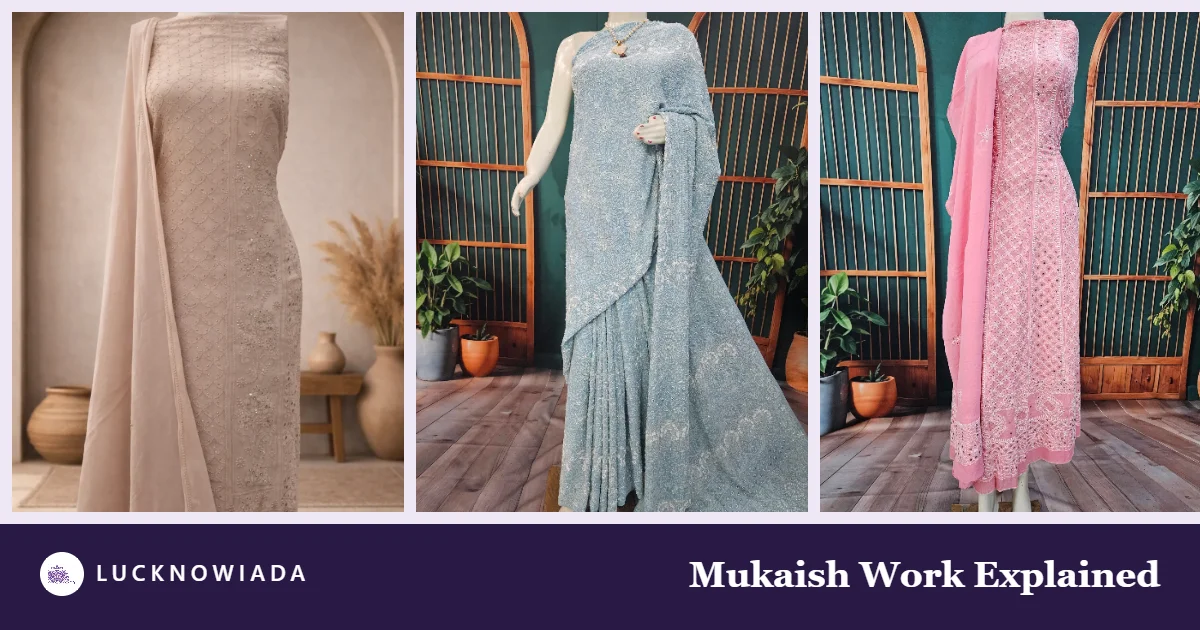
Walk through any chikankari collection and you may notice a faint glimmer on some pieces. That sparkle usually comes from mukaish, a traditional metal embroidery from Lucknow. It is often paired with chikankari, but it is a separate craft with its own tools and techniques. This guide explains mukaish work in simple terms and shows how to choose and care for it.
What is mukaish work?
Mukaish work, also called badla or mukesh work, is a technique in which thin strips of metal wire are used to create tiny dots, stars and patterns on fabric. The word “badla” refers to the flat metallic wire, and the finished effect is a soft shimmer rather than a heavy glitter.
The craft is closely associated with Lucknow, the same city known for chikankari. Over time the two crafts have come to be used together on many garments.
How mukaish is made
The process is slow and precise. In general terms:
- A thin metal wire is flattened and cut into fine pieces.
- The artisan uses a needle to pull a tiny length of the wire through the fabric.
- The wire end is twisted or curled so it sits on the surface as a small bright dot or short line.
- Dozens or hundreds of these small marks are placed in a pattern, often in neat grids or scattered motifs.
Because each mark is placed individually, a fully covered piece takes considerable time.
Mukaish versus chikankari
The two crafts are easy to confuse because they appear together. Here is a quick comparison.
- Material: chikankari uses cotton or silk thread, while mukaish uses metal wire.
- Look: chikankari gives texture and floral motifs, while mukaish gives dots, shimmer and light-catching detail.
- Feel: chikankari feels soft and thread-like, while mukaish has a slightly crisp, metallic touch.
Many pieces combine both: thread motifs for structure and mukaish for a subtle sparkle.
Where you see mukaish on clothing
Sarees
Mukaish looks especially good on flowing fabrics. Our allover mukaish badla pure georgette saree in black is an example of a saree where the metal work covers the whole fabric. Browse the full saree collection for more options.
Kurta and dupatta sets
Mukaish is also used on suits, often as dots across the dupatta or as detailing on the kurta. This mulchanderi kurta and dupatta with mukaish embroidery shows how it works on a lighter, softer fabric. You can see related designs in the mulchanderi suit category.
Chikankari with mukaish suits
Some of our chikankari suits combine both embroideries, which gives them a refined occasion-ready look without being heavy.
Why mukaish suits evening and festive wear
The glimmer of metal wire catches light softly, so mukaish pieces look elegant in the evening or at festive gatherings. Because the wire sits close to the fabric, the garment stays lighter than one with heavy sequins or beads. Whether it feels comfortable to you will depend on the base fabric, so read the product description for details.
How to care for mukaish work
Metal work is delicate, so a little care goes a long way:
- Prefer dry cleaning or very gentle hand washing, and always check the care notes for the specific piece.
- Avoid wringing, scrubbing or twisting the fabric.
- Do not use bleach or strong detergents.
- Dry flat or hang in shade, and avoid direct sunlight.
- Store folded in a soft cotton or muslin cloth, away from damp.
- Keep the piece away from perfume and hairspray, which can dull metal over time.
Our guide on how to wash chikankari has more general care tips for embroidered fabrics.
Tips for buying mukaish pieces
- Look at the spacing. Dots should be evenly placed with a consistent size.
- Check the back. Ends should be tidy, with no sharp wire edges.
- Consider the fabric. Light fabrics like georgette show mukaish beautifully but need gentle handling.
- Read the description. Check the fabric, work and care instructions on the product page before ordering.
Mukaish at Lucknowiada
Lucknowiada has sold Lucknowi chikankari clothing since 2020. Our collection includes pieces with mukaish detailing, and you can browse everything in the shop. Our walk-in store is at 1374 Maliwara, Nai Sarak, Chandni Chowk, Delhi 110006, open Monday to Saturday, 11:00 to 18:00. We ship worldwide as well.
Frequently asked questions
Is mukaish the same as badla work?
The terms are often used together. Badla refers to the flat metal wire, and mukaish describes the technique of using it to make dots and patterns.
Can mukaish be washed at home?
It is safer to follow the care instructions on your piece. Many people choose gentle hand washing or dry cleaning to protect the metal work.
Is mukaish heavy to wear?
It depends on how densely it is worked and on the base fabric. Fine mukaish dots add shimmer without much weight.
Can mukaish and chikankari be worn together?
Yes. They are frequently combined on one garment, and the two textures complement each other.
Explore more in our Chikankari Guide guides, browse the full Lucknowiada blog, or shop our chikankari suits, sarees and anarkali suits.