Blog
What Is Chikankari? A Complete Guide to Lucknow’s Famous Embroidery

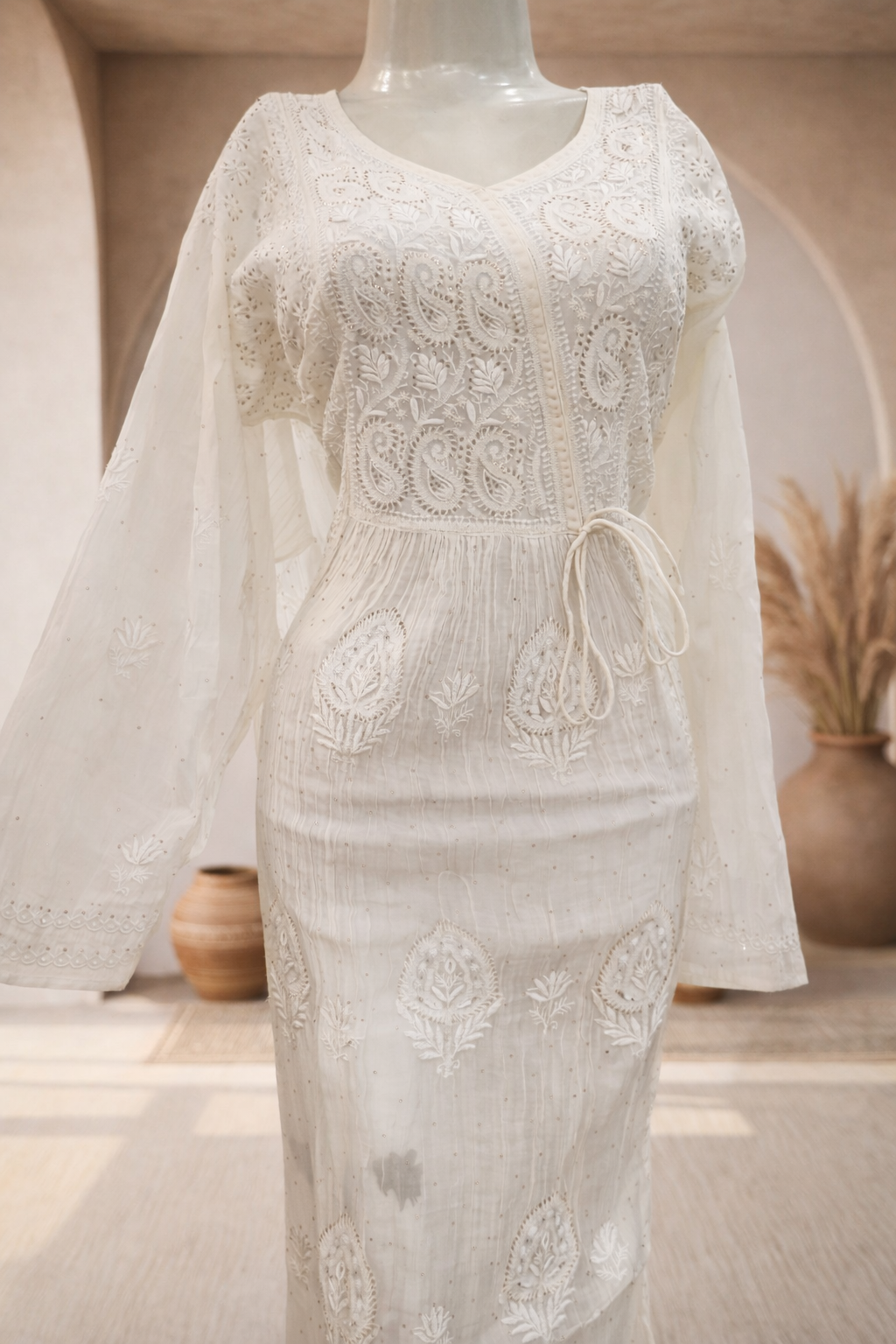
Few Indian crafts are as recognisable as chikankari. The fine white-on-white threadwork, the delicate floral motifs and the soft, breathable fabrics have made it a wardrobe favourite for generations. If you have ever wondered what chikankari actually is, how it is made and why it is so closely tied to the city of Lucknow, this guide covers the basics in plain language.
What is chikankari?
Chikankari is a traditional hand embroidery from Lucknow in Uttar Pradesh. The word “chikan” is commonly understood to come from a Persian word meaning fine needlework. Artisans stitch patterns onto light fabrics, traditionally using white thread on white or pastel cloth, although coloured thread on coloured fabric is now very common too.
What sets chikankari apart from many other embroideries is its variety of stitches. A single garment can include more than one stitch family: flat stitches that sit on the surface, raised knots that add texture, and open mesh-like stitches that create see-through patterns. Together they give chikankari its airy, lace-like look.
Lucknow chikan craft also holds a Geographical Indication (GI) tag, which recognises the city’s link with this embroidery.
A short history
Popular accounts trace chikankari to Mughal-era courts, and a well-known story credits the empress Nur Jahan with bringing the craft to prominence. Historians still debate the exact origin, so it is best to treat that story as tradition rather than settled fact. What is certain is that Lucknow became the centre of the craft, and that generations of families, many of them in and around the old city, have kept it alive.
How chikankari is made
Traditional chikankari follows a sequence of steps, each usually done by a different set of hands:
- Design and block printing: a pattern is printed onto the fabric with removable dye, usually using carved wooden blocks.
- Embroidery: artisans stitch over the pattern by hand, choosing different stitches for the petals, stems, borders and fillers.
- Washing: once the stitching is complete, the fabric is washed to remove the printed guide marks.
- Finishing: the garment is starched lightly and pressed so the embroidery sits neatly.
A heavily worked piece can take a long time, which is why handwork is valued for its patience and skill.
Common fabrics used for chikankari
Chikankari is stitched on light, breathable fabrics so the thread can pass through cleanly. Typical choices include cotton, mul, georgette, chanderi blends and similar soft cloths. If you want to explore one of these in detail, our guides to mulchanderi fabric and georgette sarees go deeper. You can also browse the mulchanderi suit collection to see how the fabric holds embroidery.
Chikankari stitches in brief
Chikankari is often described by its stitches rather than its motifs. Some of the best known are:
- Tepchi: a long, simple running stitch that forms the base of many designs.
- Bakhiya (shadow work): stitched on the reverse side so the pattern appears as a soft shadow on the front.
- Murri and phanda: tiny raised knots that look like grains or buds.
- Jaali: an open, net-like effect made by drawing the fabric threads apart rather than adding thread.
We explain each of these in more detail in our guide to chikankari stitches.
Chikankari and mukaish: what is the difference?
Mukaish is a different craft that is often paired with chikankari. It uses thin metal wire strips to make tiny shimmering dots on the fabric. Pieces that combine both give a subtle sparkle against the soft thread embroidery. For example, this mulchanderi kurta and dupatta set with mukaish embroidery pairs the two techniques.
How to wear chikankari
Chikankari works across seasons and occasions because of its light fabrics and understated look.
Everyday and office wear
A simple kurta in cotton or mul with light embroidery is comfortable for long days. Our chikankari suits range includes full suit sets that need very little styling.
Festive and occasion wear
Heavier work, pearl detailing or a flowing silhouette suits festive occasions. An anarkali with chikankari and cut dana pearl work is one option, and you can see more in the anarkali collection.
Sarees
Chikankari sarees are lightweight and drape softly. You can browse the saree collection for georgette options.
Why chikankari is still loved
Chikankari offers comfort, a timeless look and a link to a living craft tradition. It is easy to mix with plain bottoms, solid dupattas and simple jewellery, so one piece can be styled many ways. To see what is currently available, visit the shop.
About Lucknowiada
Lucknowiada has been selling Lucknowi chikankari clothing since 2020. We have a walk-in store at 1374 Maliwara, Nai Sarak, Chandni Chowk, Delhi 110006, open Monday to Saturday from 11:00 to 18:00, and we ship worldwide.
Frequently asked questions
Is chikankari only made in Lucknow?
Chikankari is most closely associated with Lucknow, and the Lucknow craft carries a GI tag. Similar white-thread embroideries exist elsewhere, but Lucknowi chikankari is the best known.
Is chikankari always white?
No. The classic look is white thread on white fabric, but modern chikankari is widely made in pastels and deeper colours with matching or contrasting thread.
Is chikankari suitable for summer?
Yes. Because it is usually stitched on light, breathable fabrics such as cotton, mul and georgette, it is a popular choice in warm weather.
How do I care for chikankari?
Gentle hand washing in cold water with mild detergent is the usual advice. Always check the care notes for your specific piece.
